
Droneshouston

drone roof inspections

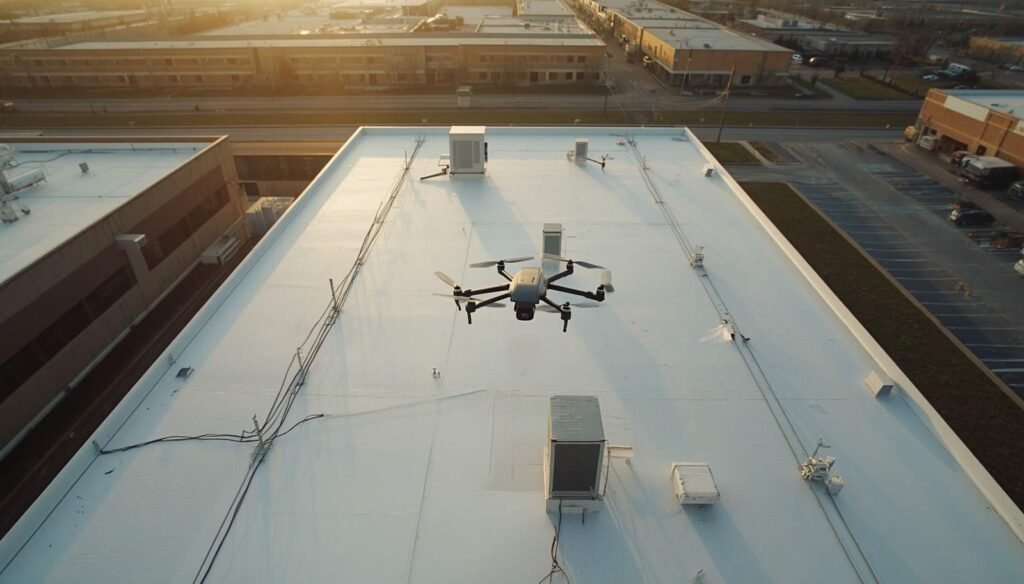
Drone landed on a Houston commercial flat roof during a drone roof inspection cost assessment
Blog

Drone Roof Inspection Cost in Houston: What You Actually Pay

Most people call us with the same question buried about ninety seconds into the conversation. They’ll describe the ceiling stain, or the tenant complaint, or the adjuster asking for photos, and then they get to it: what does a drone roof inspection cost? It’s a reasonable thing to want upfront, and roof work has never been great about answering it. Aerial inspections are newer, so people assume they’re either suspiciously cheap or reserved for corporate budgets. Neither is true. Here’s what the pricing looks like in Houston and what sits behind the number. Drone roof inspection cost in Houston: the ranges Property type Typical range Single-family home, visual inspection $150 – $350 Large home, multiple structures, or a complex roofline $300 – $600 Small commercial or retail, visual $400 – $900 Commercial flat roof with a thermal scan $600 – $2,000+ Warehouses, industrial sites, multi-building portfolios Quoted per square foot with a site minimum One caution about the bottom of that range. If someone quotes you $75, what you’re buying is a guy with a consumer drone and no certification, and what you’ll get back is a folder of blurry photos. An adjuster won’t work from it and your roofer won’t learn anything from it. What changes your drone roof inspection cost Roof size and layout A gable roof on a 2,200 square foot house is maybe twenty minutes of flying. A 400,000 square foot distribution center off Beltway 8 is a planned mapping mission with battery swaps and hours of processing afterward. Same drone, different job entirely. Visual or thermal This is the biggest swing in any drone roof inspection cost. A standard visual pass shows you the surface: lifted shingles, punctured membrane, ponding water, torn flashing, drains that stopped draining. Thermal imaging shows you what’s under it. Wet insulation gives up heat at a different rate than dry insulation, so a radiometric sensor picks out saturated areas that look perfectly normal in daylight. That sensor costs several times what a standard camera does, and the flight has to happen in a narrow window after sunset while the roof is still releasing heat. You’re paying for the equipment and the scheduling, not for extra pictures. What you get handed at the end Raw imagery is cheaper than a report somebody spent three hours annotating. If you need something an adjuster or a building owner will read without you translating it, that’s back-end time. Worth asking about before you compare two quotes, because a $400 job and a $900 job are sometimes the same flight with very different paperwork attached. Airspace, turnaround, and travel Airspace matters more here than in most cities. A lot of Houston sits inside controlled airspace thanks to Hobby, Bush, and Ellington, and flying there means authorization through LAANC first. Most requests clear in seconds. Some grids need further coordination with the FAA, which takes days and occasionally moves a flight to a different time of day. Any real quote already accounts for that planning. Beyond that: rush delivery costs extra if you’re against a claim deadline, standard turnaround is two to three business days, and anything past about ninety minutes out toward Galveston or Brazoria County picks up a trip charge. Katy, Sugar Land, Pearland, the Woodlands, inside the Loop, all standard. When thermal is worth the extra money A visual inspection tells you where the roof is damaged. Thermal tells you where the water ended up. Those are not always the same spot, and in Houston they usually aren’t. Water gets in at a seam, runs sideways under the membrane, and surfaces as a stain thirty feet away. Cut open the ceiling under the stain and you find dry decking and a bill for the drywall repair. We got into that problem in more depth in our post on finding roof leaks with thermal imaging. So: documenting hail damage after a storm, visual is generally plenty. Chasing a leak nobody can pin down, or deciding whether a 15-year-old TPO roof needs a $12,000 repair or a $180,000 replacement, thermal earns its cost the first time it stops you from tearing off a section that was fine. Drone roof inspection cost vs. sending someone up a ladder Traditional inspections aren’t free. Add up crew time, a lift rental for anything above two stories, safety setup, and people walking around on a roof during business hours, and the gap closes quickly. On a large commercial building the drone wins on price outright. On a single-story roof with easy access, it’s closer to a wash. Documentation is where it isn’t close. You end up with timestamped, geotagged coverage of the entire roof surface instead of a dozen phone shots taken from wherever the inspector could safely stand. That difference shows up during a claim. The Texas Department of Insurance says as much in its storm recovery guidance, which tells homeowners to photograph everything and hold onto damaged material until the adjuster has seen it. Full aerial coverage is about as complete as that gets. We compared the two approaches side by side here: drone roof inspections vs. traditional roof inspections. The expensive inspection is the one that misses something Something small gets overlooked in June. By September the insulation under it is saturated, and Houston humidity is not going to dry it out for you. Now the conversation isn’t about patching a seam, it’s about replacing decking and answering questions about mold. At that point nobody remembers whether the inspection was $300 or $700. What’s included when you book with us An ISKY aerial inspection comes with a Part 107 certified pilot, insurance, airspace clearance sorted out before we arrive, full high-resolution coverage of the roof, and a report you can hand straight to a roofer or an adjuster. Thermal is available as an add-on or on its own. If you’re managing multiple properties, we also run inspections on a set schedule, annually or twice a year. There’s more on that in when a commercial building needs a drone inspection and why Houston businesses are switching to drone roof
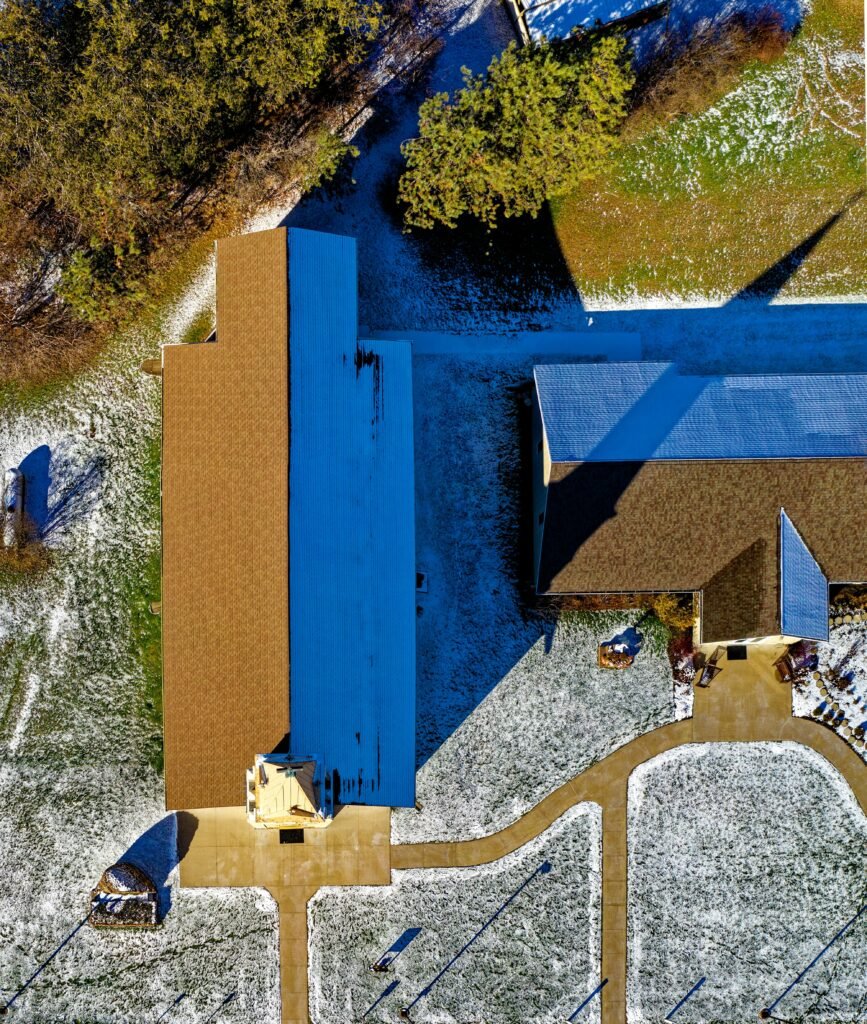
roof inspections Houston drone aerial image of residential property
Blog

Drone Roof Inspections vs. Traditional Roof Inspections in Houston

After a Houston wind event, the biggest roofing mistakes usually happen before repairs even start: missed damage, weak documentation, and unsafe access decisions. That is where roof inspections Houston property owners rely on become critical, especially for steep roof designs, three-story home layouts, and large commercial building footprints. A drone changes how teams capture data, not whether a roof needs expert judgment. The best outcomes often come from pairing fast aerial imagery with targeted, safe follow-up when hands-on confirmation truly matters. Quick Comparison: What Changes When You Inspect by Drone A drone roof inspection is an aerial roof survey that uses a planned flight plan to collect high-resolution imagery, video capture, and optional thermal imaging from above. The operator stays on the ground while the drone documents slopes, edges, and details that are hard to see from a ladder. A traditional roof inspection, sometimes called a manual roof inspection or “boots on the roof,” relies on ladder access and a technician visually reviewing the roof up close. When conditions allow, the inspector may walk the roof to check materials and components at arm’s length. Drones do not automatically replace manual inspections. They change access, documentation quality, and risk, and they often make it easier to decide where a limited hands-on check is actually worth it. Houston has specific drivers that push many properties toward drones first. Storm season creates post-storm inspections at scale, and the city has plenty of steep roof profiles, hip roof geometry, and multi-story properties where ladder safety and fall risk become real constraints. Drone Roof Inspections vs. Traditional Roof Inspections in Houston Houston roofs are rarely “simple rectangles,” and that complexity shows up in valleys, ridges, roof penetrations, and flashing transitions. A drone can document every plane quickly, while a manual approach may depend on how many safe access points exist. If you want an example, compare a two-story home in The Heights with mature trees and tight setbacks to a three-story home in River Oaks with multiple elevations. Both can be inspected traditionally, but the time on site and liability profile are very different than a remote aerial capture. What a Drone Roof Inspection Typically Includes Most drone roof inspection workflows start with high-resolution photo documentation and video capture for each roof plane. Roof inspections Houston property owners schedule often include ridges, valleys, flashing, gutters, downspouts, fascia, soffit, and common failure points around roof penetrations like pipe boots. Many providers also offer thermal scanning. This process uses thermal imaging to identify temperature anomalies that may correlate with moisture detection. It works best as a screening tool for potential water intrusion patterns rather than a standalone “leak verdict.” For properties that require measurements, 3D mapping can generate roof measurements, a measurement report, and sometimes a 3D model for estimating and documentation. These tools can complement platforms like EagleView, especially when property owners need current-condition outputs after storm damage. If you want to see how these deliverables are typically packaged, review the service details for Houston-area drone-based roof inspection reports. It is a good baseline for what “professional documentation” should look like. What a Traditional Roof Inspection Typically Includes A traditional roof inspection starts with ladder access and a visual review from the roof surface when safe to do so. The inspector may check shingles, tiles, or membrane conditions up close and look for obvious wind damage, missing shingles, and flashing displacement. The advantage is tactile confirmation. A manual roof inspection can sometimes detect soft spots, fastener issues, or localized problems in roof decking that are hard to prove from imagery alone. Traditional inspection challenges show up quickly after storms. Wet surfaces, debris, and active leaks can limit where a technician can safely step, even when the roof needs urgent assessment. Safety and Liability: Risk Profiles in the Houston Area The biggest safety difference is simple: drones reduce time spent on ladders and limit the need for boots on the roof. Roof inspections Houston property owners schedule after storms often involve steep roof designs and compromised surfaces, where reducing fall risk becomes especially important. Drones also reduce foot traffic on fragile roofs. After hail damage or wind damage, shingles, flashing edges, and ridge caps can loosen. Walking those surfaces may create additional breakage or even new leak paths. Liability involves more than worker injury. It also includes accidental property damage, disputes over responsibility, and the ability to provide timestamped photo documentation when an insurance claim becomes contentious. When Traditional Access Is Unsafe or Not Allowed Houston weather conditions can shut down safe roof access fast, especially with sudden rain bands and gusts. High wind speed, wet surfaces, and post-storm debris make many roofs poor candidates for immediate walking. Some sites also restrict access for operational or security reasons. Gated commercial sites, tight setbacks in neighborhoods like West University Place, and sensitive facilities near Downtown Houston can limit where ladders can be placed or where crews can stage. Drones still have constraints. Airspace restrictions and FAA Part 107 compliance matter, and a legitimate operator will check controlled airspace and local limitations before flying. Accuracy and Detail: What Each Method Can (and Can’t) Reveal Drones excel at comprehensive visual coverage. You get consistent angles across all slopes, repeatable documentation, and the ability to zoom in on details like lifted shingle tabs, damaged pipe boots, and compromised flashing lines. Manual inspections excel at tactile verification when safe. If you need to confirm soft spots, check attachment issues, or probe suspected weak areas in roof decking, a trained inspector on the surface can answer questions a camera cannot. Thermal imaging sits in the middle. Thermal scanning can indicate moisture patterns that suggest water intrusion, but it cannot confirm the source without context, and it can be thrown off by sun loading, insulation voids, and ventilation differences. Damage Types Common in Houston Storm Events Wind uplift often appears as creased shingles, lifted edges, and missing shingles that become easier to identify when inspectors can view the entire roof plane at once. Roof

Scroll to Top