
Drone Storm Damage Assessment in Houston: What to Document After a Hurricane
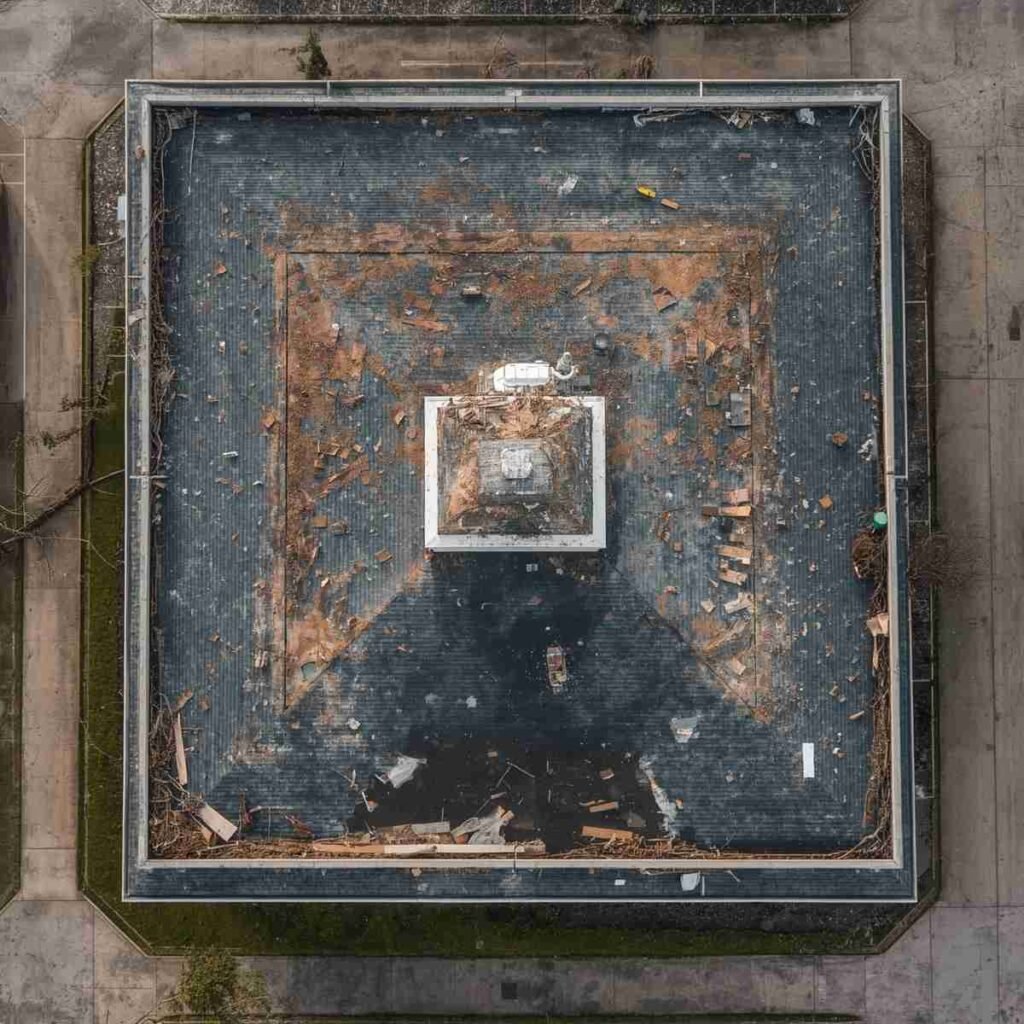
A drone storm damage assessment gives Houston property owners what a ground-level walk-around can’t after a hurricane. It shows the roof damage that actually decides your insurance claim. That damage usually sits on the slope you can’t see from the street. Wind-lifted shingles, missing tabs, and cracked flashing cluster on the back plane and along the perimeter. By the time a stain reaches a ceiling inside, the water has traveled well past where it got in. That gap is why aerial documentation has become the smarter first move for Houston property owners and managers. A short, planned flight captures high-resolution, time-stamped images of the whole roof. It happens before any crew starts emergency work. Adjusters increasingly want that kind of record, not a roofer’s word. Imagery captured before repairs begin is what protects the claim. This guide covers what to document and when it’s safe and legal to fly. It also shows how to build a photo set that holds up during a busy claim season. Why aerial imagery beats a ground inspection After a storm, a commercial roof is one of the worst places to send a person. Standing water hides soft spots, debris covers punctures, and wet membrane is slick. A drone maps the whole roof in a single pass and flags problems you’d otherwise miss until the next rain — without putting anyone on a ladder above an unstable surface. The evidence is also stronger. A drone captures every roof plane the same way, at full resolution, with a date and time baked into each file. When a claims adjuster reviews that set, it’s easy to tell storm-related damage from old wear, prior patches, or earlier impact marks. A quick walk-around with a phone rarely does that. If you’re weighing your options, here’s how drone roof inspections compare to a traditional roof check. What insurance adjusters actually want to see What insurance adjusters actually want to see Adjusters handle heavy caseloads after a Houston hurricane. A clear, structured set moves your claim faster than a folder of random close-ups. Aim to document: A close-up of a puncture is far stronger with context. An oblique shot proves it sits right beside a vent boot on the leeward slope. Context is what turns a photo into proof. When it’s safe and legal to fly after a storm Timing matters. Wait for stable weather and steady winds before you fly — gusty post-storm bands cause blurry footage, incomplete coverage, and lost aircraft. Treat the site as a hazard zone first: confirm the property is clear of downed power lines and unstable trees before anything leaves the ground. The legal side matters just as much. Documenting damage for an insurance claim is a commercial purpose, so it falls under the FAA’s Part 107 rules, which require a certified remote pilot. Houston sits near several major airports and busy heli routes, so airspace has to be checked every flight — even on a property you’ve flown before. After a major storm, the FAA often issues temporary flight restrictions over response and recovery zones, and those can change by the hour. If you’re hiring a pilot, ask how they handle airspace and NOTAM checks. For seasonal context, the National Hurricane Center tracks Gulf activity through the season, which runs June into November and peaks in late summer. Your first 24–72 hours: a documentation plan The window right after a storm is when your evidence is strongest. A simple, repeatable order keeps the set complete: That last step does more than it looks like. A one-page index that maps “north slope, mid-field — shingle lift” to an exact filename cuts adjuster back-and-forth and speeds re-inspections. What a drone can — and can’t — detect A drone storm damage assessment is excellent at catching the visible, wind-driven damage that hurricanes cause: missing and lifted shingles, punctures, displaced ridge caps, bent drip edge, and gutter separation. The imagery shows how that damage tracks along edges and corners, where wind pressure concentrates. With sharp, close, well-lit passes, a drone can even reveal impact marks and granule loss. What a drone can’t do is confirm what’s already inside the roof. A slope can look fine from above while water is sitting in the insulation or decking. When you see ceiling stains, bubbling paint, or a musty smell, pair the aerial set with an attic check and moisture readings. Drone thermal imaging can confirm where a leak entered, and our thermal imaging servicesare built for exactly that kind of follow-up. Aerial imagery is one part of a complete storm-damage record, not the whole thing. DIY vs. hiring a Part 107 pilot A homeowner-grade drone can give you a quick look, and you’re allowed to fly your own property if you can do it safely and legally. The common DIY gap is coverage: edges, gutters, and flashing transitions get skipped, resolution runs too low to prove shingle condition, and metadata gets stripped by filters or re-saving. A professional flight is more likely to deliver systematic, repeatable coverage with clean, unedited originals — the kind of package that matches how adjusters review a claim. For commercial documentation, a Part 107-certified pilot is often required outright, and the liability of flying near people, traffic, and damaged structures makes controlled flight paths worth paying for. The same logic applies to a full commercial building drone inspection, where scale and access make a professional set the practical choice. Documentation mistakes that weaken a claim A few avoidable errors do the most damage to a storm claim: Frequently asked questions How much does a drone roof inspection cost in Houston? Pricing depends on roof size, access, and deliverables. Basic photo-and-video capture often starts in the low hundreds, while multi-building campuses or annotated claim reports run higher. Is a drone storm damage assessment worth it? After a hurricane, usually yes. It documents hard-to-see slopes safely and quickly, and the time-stamped, before-repairs record is what tends to reduce disputes over storm-related versus pre-existing damage. Can I inspect my own roof with a drone? You can if you can fly