
Construction progress monitoring can prevent a small oversight on a 40-acre job site from turning into a week of schedule risk once concrete, steel, and trades stack on top of it.
Many Houston builders now rely on drone construction monitoring instead of occasional site visits because recurring documentation keeps owners, lenders, and project teams aligned. As a result, stakeholders can review progress quickly and make informed decisions without constantly being on-site.
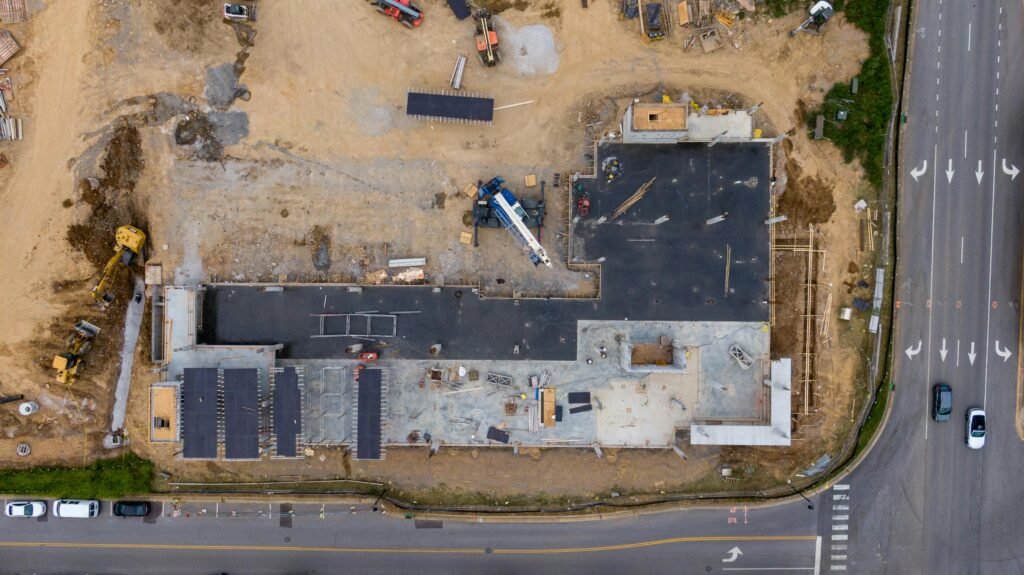
Why Drone Progress Monitoring Matters on Houston Job Sites
Houston projects move fast, sprawl wide, and involve distributed stakeholders who cannot all be on-site when decisions are made.
Construction progress monitoring solves the visibility gap by creating remote site visibility that is consistent enough to trust in meetings, pay apps, and claims.
Weather is a real driver here, not a footnote.
Heavy rain events, sudden wind shifts, and storm cleanup create weather delays that are easy to argue about and hard to prove without timestamped documentation.
Progress monitoring is more than aerial photos.
The value comes from a shared visual record that is captured the same way over time, so teams can see what changed, when it changed, and what it affects.
Owners and lenders want confidence without adding site visits.
Subcontractors want clarity on access, laydown yard changes, and sequencing, especially when labor shortages force crews to rotate across multiple projects.
What “Progress Monitoring” Means (Not Just Drone Photos)
Progress monitoring means recurring drone flights that produce consistent, comparable deliverables over time.
Instead of a one-off flight, you get timeline storytelling, measurement, and verification of completed work that supports decisions.
A proper program shows what was installed, what is staged, and what is blocked.
It also creates a defensible audit trail for change orders, delays, and scope disputes.
What Data Drones Capture for Construction Progress
Most Houston teams use a mix of visuals and mapping. The choice depends on whether the question is “what happened?” or “how much changed?”
The baseline deliverables typically include nadir imagery (straight-down), oblique imagery (angled), site walkthrough videos, and panoramas from key vantage points.
For construction progress monitoring that requires measurements, photogrammetry processing can produce an orthomosaic, a 3D model, and a point cloud. It can also generate DSM and DTM surface products for grading and drainage analysis when needed.
These outputs support stockpile measurements, earthwork calculations, and site logistics tracking. Teams can monitor haul routes, crane pads, and material staging more effectively.
They also support documentation for pay applications, change orders, and stakeholder updates. In addition, construction progress monitoring provides site-wide context and shows conditions on specific dates.
Progress Deliverables Stakeholders Actually Use
Weekly photo sets with matched camera angles are the workhorse deliverable.
When the same views repeat every week, side-by-side comparisons become obvious, and the conversation shifts from opinions to evidence.
Annotated maps are the next most-used tool.
Pin-based issue tracking helps field-to-office collaboration by tying notes to locations, then pushing those notes into a progress report that owners and PMs can review quickly.
When You Need Mapping vs. Just Visual Documentation
Use mapping when the question is quantifiable.
If you need quantities, distances, grading progress, or overlay analysis against design, an orthomosaic, point cloud, or 3D model is the right tool.
Use visual-only packages when the goal is communication.
Executive updates, marketing documentation, and general stakeholder reporting often need clarity and consistency more than survey-grade outputs.
How Recurring Drone Flights Create a Reliable Visual Timeline
Most Houston commercial and civil teams schedule weekly flights because they align with meeting cadence and improve change detection.
In some cases, fast-moving industrial projects, shutdown windows, or major concrete cycles may require daily flights. Smaller projects, however, can often rely on milestone-based captures.
For construction progress monitoring, consistency matters more than volume.
A repeatable flight path, consistent altitude, matching camera angles, and similar lighting conditions make week-to-week changes easier to interpret.
By contrast, one-off flights often create noise and limit meaningful comparisons.
Standardized missions create reliable comparisons that support schedule discussions, verify percent completion, and reduce rework.
In addition, simple standards help teams save time later.
Use naming conventions, date-stamped folders, and version control to keep deliverables organized. As a result, teams can quickly locate the correct documentation during a claim, audit, or stakeholder review.
Standardizing Flight Paths and Camera Angles
Mission planning tools let pilots replicate routes and overlap settings, which improves alignment for photogrammetry and makes visuals comparable.
This is where matched camera angles pay off, because stakeholders start recognizing the same “corners” of the project every week.
Pick a handful of fixed “hero” viewpoints.
These might include the main site entrance, a long-axis view over the building pad, and a high oblique angle that captures the laydown yard, access roads, and crane operations.
Cadence Planning for Houston Weather and Site Access
Plan for missed days.
Building buffer weeks around storm seasons and high-wind days keeps the monitoring program consistent even when the calendar is not.
Coordinate flights with the superintendent’s plan of the day.
Avoid peak site traffic, active crane picks, and high-risk operations, and schedule around major pours so imagery shows clear pre-pour and post-pour conditions.
Step-by-Step Workflow: From Flight to Progress Report
A repeatable workflow turns drone data into actionable decisions.
For construction progress monitoring, most teams follow four steps: pre-flight planning, data capture, processing, and publishing with a concise narrative.
Pre-flight planning starts with clear objectives.
First, define whether the deliverable will support visual documentation, mapping, construction inspections, or pay application verification. Then establish site boundaries and create a safety plan.
Next, follow a documented mission plan during data capture.
Use consistent camera settings and log site conditions for every flight. When measurement accuracy is important, deploy ground control points to support mapping and overlay analysis.
After capture, processing converts raw imagery into usable deliverables.
This step includes image stitching, map generation, 3D model creation, and quality control reviews. As a result, deliverables remain consistent from one reporting period to the next.
Finally, publishing determines whether stakeholders actually use the information.
Share deliverables through cloud collaboration platforms and link them to relevant plan sets when appropriate. In addition, provide a brief weekly summary that highlights key changes and explains their impact on the project.
Pre-Flight Planning and Airspace Checks
FAA Part 107 compliance is non-negotiable for professional operations and helps ensure safe, legal, and consistent drone operations on construction sites.
That includes pilot certification, operational limits, and documented procedures that match a construction environment.
Airspace planning matters in Houston.
Use the LAANC authorization system where available, and verify controlled airspace near major airports like George Bush Intercontinental Airport and Hobby Airport before every flight.
Site coordination is a safety step, not paperwork.
Document hazards, identify takeoff and landing zones away from active operations, and confirm radio or spotter protocols when equipment movement is heavy.
Processing, QA, and Sharing to the Team
A simple QA checklist prevents repeat flights.
Check for full coverage, blur, shadowing, missing corners, and georeferencing accuracy when maps or models are required.
Deliver in formats stakeholders will open.
Most teams want shareable links, PDFs with callouts, and short highlight clips, with the full-resolution archive stored for documentation and audit trail needs.
How Teams Use Drone Progress Data to Make Decisions
A repeatable workflow turns drone data into actionable decisions.
For construction progress monitoring, most teams follow four steps: pre-flight planning, data capture, processing, and publishing with a concise narrative.
Pre-flight planning starts with clear objectives.
First, define whether the deliverable will support visual documentation, mapping, construction inspections, or pay application verification. Then establish site boundaries and create a safety plan.
Next, follow a documented mission plan during data capture.
Use consistent camera settings and log site conditions for every flight. When measurement accuracy is important, deploy ground control points to support mapping and overlay analysis.
After capture, processing converts raw imagery into usable deliverables.
This step includes image stitching, map generation, 3D model creation, and quality control reviews. As a result, deliverables remain consistent from one reporting period to the next.
Finally, publishing determines whether stakeholders actually use the information.
Share deliverables through cloud collaboration platforms and link them to relevant plan sets when appropriate. In addition, provide a brief weekly summary that highlights key changes and explains their impact on the project.
Bridging the Gap Between Field and Office
Annotated imagery reduces back-and-forth because questions can be answered visually.
Instead of long email chains, teams can point to a location, attach notes, and clarify RFIs with shared context.
A shared weekly progress package becomes the single source of visual truth.
Owners, PMs, and supers can work from the same set of dated deliverables, which improves field-to-office collaboration and reduces misalignment.
Verifying Work for Pay Applications and Claims
Date-stamped visuals support percent-complete discussions.
They are especially useful when a line item is partially complete across a wide footprint, like curb, base, or underground work.
A consistent archive creates an audit trail.
When disputes arise over weather delays, access constraints, or out-of-sequence work, the visual record often becomes the fastest path to resolution.
Houston-Specific Use Cases and Examples
Houston’s large sites and multi-phase developments make construction progress monitoring a practical tool rather than a luxury.
When a project spans multiple blocks or covers a large industrial footprint, a short drone flight can capture information that would otherwise take hours to document on foot.
In addition, post-storm documentation provides significant value for project teams.
Flights after heavy rain can document standing water, erosion, access road conditions, and recovery efforts. As a result, owners and lenders gain a clearer understanding of schedule risks and site conditions.
Industrial corridors and port-adjacent projects also benefit from construction progress monitoring.
Stakeholders can receive regular updates without increasing site congestion. Meanwhile, safety teams can review conditions without pulling supervisors away from active operations.
Transportation and roadway improvement projects benefit from consistent aerial documentation as well.
Progress imagery helps communicate project phasing, temporary traffic patterns, and work zone impacts. Consequently, non-technical stakeholders can understand project status more easily and make better-informed decisions.
Where Drone Monitoring Fits Common Houston Project Types
Commercial and mixed-use projects often focus on exterior envelope progress and site logistics.
Matched views make it easy to track façade sequencing, rooftop equipment staging, and parking lot buildout.
Industrial facilities often prioritize roof areas, equipment pads, and perimeter documentation.
For specialized building envelope needs, teams often pair progress monitoring with services like professional drone-based roof inspections for Houston facilities and thermal-assisted roof leak detection performed by trained operators.
Local Landmarks and Areas to Reference in Reporting
Context shots help orient stakeholders who are not on-site.
Reports that reference recognizable areas like Downtown Houston, the Energy Corridor, or the Port of Houston reduce confusion when multiple projects are being discussed in the same meeting.
For wide sites near George Bush Intercontinental Airport or Hobby Airport, airspace planning should be explicit in the flight plan.
That means confirming controlled airspace requirements, LAANC availability, and any operational constraints before scheduling recurring missions.
Common Mistakes to Avoid (And What Works Better)
One-time flights with inconsistent angles are the most common failure.
Standardized recurring missions with a repeatable flight path create true comparisons and clearer change detection.
Collecting data without a reporting format is another problem.
A repeatable weekly template tied to schedule milestones makes the progress report usable, even for stakeholders who only spend five minutes reviewing it.
Data governance is often ignored until it becomes urgent.
Clear access controls, retention policies, and stakeholder permissions protect sensitive information and prevent uncontrolled sharing.
Flying without site coordination creates safety and adoption issues.
Integrate the flight plan with the superintendent’s daily plan so operations are not disrupted and the pilot is not working around surprises.
Consistency Beats “Cool Footage”
Matched camera angles make progress obvious and defensible.
They also make it easier to train owners and internal teams on what to look for in weekly updates.
A simple, repeatable package beats long highlight videos.
If marketing content is needed, it should be a separate deliverable, often handled through dedicated aerial photo and video services built for commercial teams.
Security, Privacy, and Data Ownership
Clarify ownership of imagery, maps, models, and other deliverables before the project begins.
For construction progress monitoring, establish clear agreements that define how stakeholders can use the content. In addition, specify who can share it and whether it supports marketing efforts, project documentation, or both.
Limit the distribution of sensitive industrial information whenever possible.
Furthermore, maintain access logs and use role-based permissions to control who can view project data. Store deliverables in secure workspaces that align with the project’s security requirements.
As a result, construction progress monitoring data remains organized, protected, and accessible only to authorized stakeholders.
Key Takeaways for Implementing Drone Progress Monitoring
Start with a clear purpose: communication, verification, measurement, or a blend.
That choice determines whether you prioritize visuals, mapping outputs, or both.
Standardizing recurring drone flights is the highest-leverage practice.
A consistent visual timeline makes stakeholder updates faster, reduces confusion, and strengthens documentation when schedule risk turns into a claim.
Choose deliverables that match decisions.
Quick visuals work for updates, while orthomosaics, 3D models, and point clouds support quantification and overlay analysis against as-designed plans.
Houston planning needs to account for weather and airspace constraints.
Build a cadence that can survive storms and wind, and keep FAA Part 107 and controlled airspace requirements baked into scheduling.
A Practical “Minimum Viable” Drone Monitoring Program
Run weekly flights with fixed viewpoints and matched camera angles.
Publish a one-page progress summary that links to photo sets, a short site walkthrough video, and any annotated maps.
Organize deliverables in a centralized cloud folder with date-based structure and stakeholder permissions.
When measurement is needed, add mapping deliverables through a provider that offers construction-ready drone mapping and model deliverables and can document ground control points and QA steps.
FAQ: Drone Monitoring for Houston Construction Teams
How are drones used in construction monitoring?
Teams fly repeatable missions to capture consistent photos, video, and maps, then compare week-over-week progress for change detection.
That information supports remote site visibility, verifies completed work, and improves stakeholder updates without adding site traffic.
What construction companies use drones?
General contractors, civil contractors, owners’ reps, and specialty trades use drones, especially on large sites where documentation and subcontractor coordination reduce rework.
Developers and engineering firms also use drone construction monitoring to keep distributed decision-makers aligned.
Can drone surveys be used for construction?
Yes, when captured and processed correctly, drone mapping can produce orthomosaics, 3D models, and measurements for earthwork quantities, stockpile volumes, and site planning.
Accuracy depends on flight planning, processing settings, and, when required, ground control points and QA.
How are drones being used in the construction industry?
Beyond progress photos, drones support construction inspection tasks, safety checks, as-built documentation, schedule coordination, and cloud collaboration between field and office.
Many teams also use them for roof inspections and envelope checks, often pairing progress monitoring with a clear comparison of drone-based roof inspection methods versus traditional approaches.
Ready to Put Drone Progress Monitoring to Work in Houston?
If you want progress reporting that holds up in owner meetings, pay apps, and claims, the key is consistency: recurring flights, matched angles, and deliverables tied to real decisions.
Contact Drones Houston to set up a drone progress monitoring program built around FAA-compliant operations, repeatable reporting, and the level of documentation Houston projects demand.