
After a Houston wind event, the biggest roofing mistakes usually happen before repairs even start: missed damage, weak documentation, and unsafe access decisions. That is where roof inspections Houston property owners rely on become critical, especially for steep roof designs, three-story home layouts, and large commercial building footprints.
A drone changes how teams capture data, not whether a roof needs expert judgment. The best outcomes often come from pairing fast aerial imagery with targeted, safe follow-up when hands-on confirmation truly matters.
Quick Comparison: What Changes When You Inspect by Drone
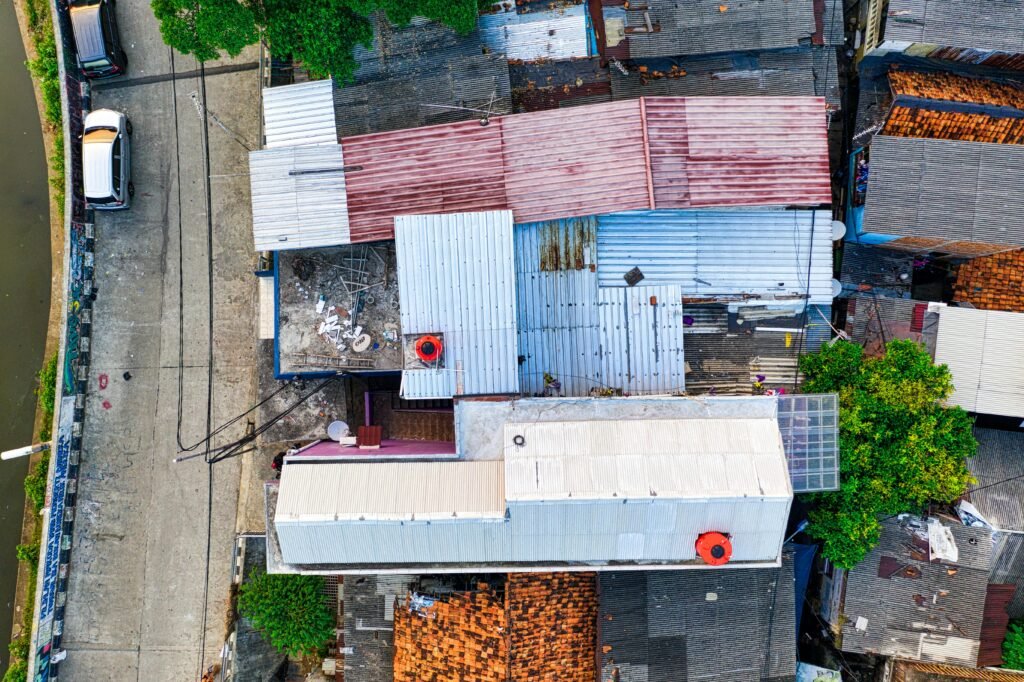
A drone roof inspection is an aerial roof survey that uses a planned flight plan to collect high-resolution imagery, video capture, and optional thermal imaging from above. The operator stays on the ground while the drone documents slopes, edges, and details that are hard to see from a ladder.
A traditional roof inspection, sometimes called a manual roof inspection or “boots on the roof,” relies on ladder access and a technician visually reviewing the roof up close. When conditions allow, the inspector may walk the roof to check materials and components at arm’s length.
Drones do not automatically replace manual inspections. They change access, documentation quality, and risk, and they often make it easier to decide where a limited hands-on check is actually worth it.
Houston has specific drivers that push many properties toward drones first. Storm season creates post-storm inspections at scale, and the city has plenty of steep roof profiles, hip roof geometry, and multi-story properties where ladder safety and fall risk become real constraints.
Drone Roof Inspections vs. Traditional Roof Inspections in Houston
Houston roofs are rarely “simple rectangles,” and that complexity shows up in valleys, ridges, roof penetrations, and flashing transitions. A drone can document every plane quickly, while a manual approach may depend on how many safe access points exist.
If you want an example, compare a two-story home in The Heights with mature trees and tight setbacks to a three-story home in River Oaks with multiple elevations. Both can be inspected traditionally, but the time on site and liability profile are very different than a remote aerial capture.
What a Drone Roof Inspection Typically Includes
Most drone roof inspection workflows start with high-resolution photo documentation and video capture for each roof plane. Roof inspections Houston property owners schedule often include ridges, valleys, flashing, gutters, downspouts, fascia, soffit, and common failure points around roof penetrations like pipe boots.
Many providers also offer thermal scanning. This process uses thermal imaging to identify temperature anomalies that may correlate with moisture detection. It works best as a screening tool for potential water intrusion patterns rather than a standalone “leak verdict.”
For properties that require measurements, 3D mapping can generate roof measurements, a measurement report, and sometimes a 3D model for estimating and documentation. These tools can complement platforms like EagleView, especially when property owners need current-condition outputs after storm damage.
If you want to see how these deliverables are typically packaged, review the service details for Houston-area drone-based roof inspection reports. It is a good baseline for what “professional documentation” should look like.
What a Traditional Roof Inspection Typically Includes
A traditional roof inspection starts with ladder access and a visual review from the roof surface when safe to do so. The inspector may check shingles, tiles, or membrane conditions up close and look for obvious wind damage, missing shingles, and flashing displacement.
The advantage is tactile confirmation. A manual roof inspection can sometimes detect soft spots, fastener issues, or localized problems in roof decking that are hard to prove from imagery alone.
Traditional inspection challenges show up quickly after storms. Wet surfaces, debris, and active leaks can limit where a technician can safely step, even when the roof needs urgent assessment.
Safety and Liability: Risk Profiles in the Houston Area
The biggest safety difference is simple: drones reduce time spent on ladders and limit the need for boots on the roof. Roof inspections Houston property owners schedule after storms often involve steep roof designs and compromised surfaces, where reducing fall risk becomes especially important.
Drones also reduce foot traffic on fragile roofs. After hail damage or wind damage, shingles, flashing edges, and ridge caps can loosen. Walking those surfaces may create additional breakage or even new leak paths.
Liability involves more than worker injury. It also includes accidental property damage, disputes over responsibility, and the ability to provide timestamped photo documentation when an insurance claim becomes contentious.
When Traditional Access Is Unsafe or Not Allowed
Houston weather conditions can shut down safe roof access fast, especially with sudden rain bands and gusts. High wind speed, wet surfaces, and post-storm debris make many roofs poor candidates for immediate walking.
Some sites also restrict access for operational or security reasons. Gated commercial sites, tight setbacks in neighborhoods like West University Place, and sensitive facilities near Downtown Houston can limit where ladders can be placed or where crews can stage.
Drones still have constraints. Airspace restrictions and FAA Part 107 compliance matter, and a legitimate operator will check controlled airspace and local limitations before flying.
Accuracy and Detail: What Each Method Can (and Can’t) Reveal
Drones excel at comprehensive visual coverage. You get consistent angles across all slopes, repeatable documentation, and the ability to zoom in on details like lifted shingle tabs, damaged pipe boots, and compromised flashing lines.
Manual inspections excel at tactile verification when safe. If you need to confirm soft spots, check attachment issues, or probe suspected weak areas in roof decking, a trained inspector on the surface can answer questions a camera cannot.
Thermal imaging sits in the middle. Thermal scanning can indicate moisture patterns that suggest water intrusion, but it cannot confirm the source without context, and it can be thrown off by sun loading, insulation voids, and ventilation differences.
Damage Types Common in Houston Storm Events
Wind uplift often appears as creased shingles, lifted edges, and missing shingles that become easier to identify when inspectors can view the entire roof plane at once. Roof inspections Houston property owners schedule after storms often rely on aerial imagery to compare roof slopes consistently, especially when damage varies across exposures.
Hail impact marks and granule loss can look subtle from the ground. High-resolution imagery helps document the density and distribution of suspected hail damage across multiple roof facets, including ridges, valleys, and roof penetrations where impacts often concentrate.
Flashing displacement is another common issue, especially around roof transitions, chimneys, skylights, and pipe boots. Drones can capture these vulnerable edges without forcing technicians to walk near unstable roof perimeters.
Where Drone Data Needs Follow-Up
Some problems live below the surface. Underlayment condition, hidden substrate deterioration, and certain interior moisture sources cannot be confirmed by photos alone.
Leak investigation is the most common “follow-up required” scenario. Drone data can narrow the search area, but targeted physical verification, attic checks, or controlled water testing may still be needed to confirm the repair scope.
If moisture detection is the goal, pairing aerial thermal imaging with a focused interior review is often the fastest path to a confident answer. For properties with recurring leaks, it is worth reviewing how aerial thermal workflows support roof leak detection.
Speed, Disruption, and Reporting: The Practical Differences
Drones can capture a full roof quickly. As a result, crews spend less time on site while keeping driveways, entrances, and loading areas clearer. Roof inspections Houston property owners schedule for active homes or commercial buildings often benefit from that reduced disruption.
Traditional inspections usually take longer because setup and safety checks require additional time. Access points can also limit coverage. On complex roofs, inspectors may need to reposition ladders multiple times, which increases both time and risk.
Reporting is another area where drones often pull ahead. Deliverables commonly include annotated photos, organized photo sets by roof plane, and shareable inspection reports that stakeholders can easily review and forward.
For multi-trade projects, drone documentation can also support pre-work coordination. If you need broader exterior documentation beyond roofing, these Houston aerial inspection options show how the same approach can apply to façades and hard-to-reach elevations.
Documentation for Insurance Adjusters and Claims
Insurance adjusters work faster when the documentation is complete and consistent. Timestamped aerial photos, full-slope coverage, and clear close-ups reduce back-and-forth over what is damaged and where it is located.
Consistency matters for scope discussions. When the same angles are captured across every slope, it becomes easier to explain why one facet needs repair while another needs replacement, or why accessory items like flashing and pipe boots should be included in a roof estimate.
Drone documentation also supports roof insurance inspection and roof storm inspection workflows during high-volume periods. After widespread hail events in areas like EaDo or the Energy Corridor, the ability to document quickly can keep projects moving.
Cost Considerations: What You’re Really Paying For
For storm damage documentation, drones often provide the fastest way to capture defensible evidence across every roof slope. Roof inspections Houston property owners schedule after severe weather usually require clear documentation that helps insurance adjusters review claims more efficiently.
For pre-purchase evaluations or annual roof maintenance, a hybrid approach often works best. Property owners can use aerial imagery to document overall roof conditions first, then follow up with targeted manual checks where photos suggest potential risk.
For leak investigations, start with aerial coverage and thermal imaging when conditions allow. After that, focused hands-on inspections can help confirm likely sources because water intrusion paths often travel far from the visible stain.
Property type also matters. Multi-family and commercial building roofs frequently benefit from drone inspections first because of access limitations, property scale, and the need to share documentation with multiple stakeholders.
For marketing or stakeholder presentations, some teams also want polished visuals. If that is part of your workflow, professional aerial photo and video services can complement an inspection report without turning it into a “pretty pictures only” deliverable.
Budget Scenarios Where Drones Often Win
Large commercial roofs and multi-building sites benefit because coverage time scales well. One flight plan can document multiple structures with consistent outputs.
Hard-to-access roofs can also tilt costs toward drones. If a traditional inspection would require lifts, special ladder systems, or extended setup, aerial capture can reduce total labor and scheduling friction.
When Traditional May Be Comparable or Necessary
Small, low-slope roofs with easy access can be quick for a manual roof inspection. If the roof is safe to walk and the scope is simple, costs may be similar.
Some situations require immediate physical confirmation. If a contractor needs to verify attachment issues, check suspected soft spots, or confirm roof decking condition before authorizing repairs, a traditional approach may be necessary.
Feature Comparison Table: Drone vs. Traditional Roof Inspections
| Criteria | Drone Roof Inspection | Traditional Roof Inspection |
|---|---|---|
| Safety | Lower fall risk due to remote capture | Higher fall risk due to ladders and roof walking |
| Coverage | Strong full-plane coverage, easy to repeat | Can be limited by safe access points and obstacles |
| Time on site | Often shorter, especially on large roofs | Often longer due to setup and repositioning |
| Disruption | Minimal disruption around the property | More staging and foot traffic |
| Accuracy for surface damage | Excellent for missing shingles, flashing issues, punctures | Excellent when close-up viewing is safe |
| Confirming soft spots | Cannot directly confirm by touch | Strong for detecting soft spots and some decking issues |
| Deliverables | Annotated photos, video capture, shareable inspection report | Notes plus photos, varies by inspector |
| Measurements | Can produce roof measurements and a measurement report | Often estimated manually or via separate tools |
| Thermal | Optional thermal imaging and thermal scanning | Sometimes available, often limited by equipment |
| Limitations | Weather conditions, wind speed, airspace restrictions | Safety limits, access limits, potential roof disturbance |
| Houston relevance | Handles post-storm volume well; great for steep roofs and multi-story homes | Useful when hands-on checks are safe and needed |
If you need mapping-grade outputs, these roof mapping and measurement services are the type of add-on that can tighten estimating and reduce measurement disputes.
Choosing the Right Option: Match the Method to Your Roof and Goal
For storm damage documentation, drones often provide the fastest way to capture defensible evidence across every roof slope. Roof inspections Houston property owners schedule after severe weather usually require clear documentation. That documentation helps insurance adjusters review claims more efficiently.
For pre-purchase evaluations or annual roof maintenance, a hybrid approach often works best. Property owners can use aerial imagery to document overall roof conditions first. Then they can follow up with targeted manual checks where photos suggest potential risk.
For leak investigations, start with aerial coverage and thermal imaging when conditions allow. After that, focused hands-on inspections can help confirm likely sources. Water intrusion paths often travel far from the visible stain.
Property type also matters. Multi-family and commercial building roofs frequently benefit from drone inspections first because of access limitations and property scale. In addition, teams often need to share documentation with multiple stakeholders.
Best Fit for Drone Inspections
Steep, tall, complex, or fragile roofs where minimizing foot traffic matters. This includes many three-story home layouts and older roof systems where walking can cause extra damage.
Situations where you need shareable evidence fast for repairs, budgeting, or an insurance claim. Clear photo documentation and annotated photos reduce misunderstandings and speed up decisions.
Best Fit for Traditional Inspections
Cases where a hands-on assessment is safe and needed to confirm substrate or attachment issues. If you suspect soft spots or localized roof decking deterioration, touch still matters.
Inspections that include attic or interior checks as part of a broader evaluation. A camera cannot replace a trained eye inside the building when tracking moisture and ventilation conditions.
How Drones Houston Approaches Drone Roof Inspections in Houston
Drones Houston positions drone roof inspection work around clear documentation, safer evaluations, and fast reporting with minimal disruption. The focus is high-resolution imagery first, with thermal scanning options when moisture detection is part of the question.
This approach helps homeowners, insurance adjusters, and facility managers who need evidence they can actually share. It also supports planning conversations, whether you are building a roof estimate, prioritizing preventive maintenance, or validating storm damage across multiple structures.
Expect honest recommendations on scope. Drones Houston may recommend drone-only documentation when the goal is coverage and reporting, or drone plus targeted manual follow-up when tactile confirmation will change the repair plan.
Deliverables You Can Expect
Clear photo sets organized by roof plane and key components. That includes edges, flashing lines, penetrations, gutters, downspouts, fascia, and soffit conditions.
A summary of findings with a shareable inspection report. When requested, that can include annotated photos, roof measurements, and outputs from 3D mapping such as a measurement report or 3D model.
Local Service Relevance Across Houston
Houston’s housing stock ranges from older homes in The Heights to high-value properties in River Oaks and dense streetscapes in West University Place. Each creates different access constraints, especially with trees, setbacks, and multi-level rooflines.
Commercial corridors in EaDo, the Energy Corridor, and Downtown Houston often need documentation that can be shared across maintenance teams and vendors. Common triggers include hail, wind events, and heavy rain cycles that drive roof storm inspection demand.
FAQs
Is a drone roof inspection worth it?
It is often worth it when safety, speed, and documentation matter. Steep, tall, or storm-damaged roofs are strong candidates because you get detailed imagery with minimal disruption and less jobsite safety exposure.
What is the 25% rule in roofing?
In many insurance and repair contexts, the “25% rule” refers to guidance that if a significant portion of a roof section is damaged, replacing a larger matching area may be required. Whether it applies depends on policy terms and how local code interpretation is handled for that specific property.
How much does it cost for a drone roof inspection?
Pricing varies based on roof size, height, roof pitch, complexity, and add-ons like thermal imaging or 3D mapping. Many providers price it similarly to, or sometimes less than, manual inspections on hard-to-access properties because access time and equipment needs can drop.
Can you do roof inspections with a drone?
Yes, as long as the operator is properly licensed and follows FAA Part 107 rules, including any airspace restrictions. Drones can capture detailed roof imagery and measurements, but some cases still need targeted hands-on confirmation for substrate, attachment, or interior moisture questions.